


Beer Brewing Equipment
BG machinery was founded over 12 years ago as a manufacturing operation focused on producing high-quality, durable beer equipment for bars and breweries. The founder --- Mr. Hao, a veteran of mechanical manufacturing and passionate brewer himself, had a vision of creating equipment that would help other brewers achieve their craft with ease and efficiency.
Why Choose Us
Professional Team
With a dedicated team of engineers, designers, and craftsmen, we're constantly pushing the envelope on what's possible in beer equipment design, delivering cutting-edge products that help brewers create the perfect brew every time.
High-Quality Materials
Our beer equipment is made of food-grade stainless steel, which is durable, corrosion-resistant and hygienic. It meets the quality requirements of food and beverage production and ensures the quality of beer.
Production Equipment
We pride ourselves on having state-of-the-art production equipment to craft high-quality beer equipment. Here is a list of some of the equipment that we have in our production facility: Laser cutting machines,CNC bending machines,Welding stations,Polishing equipment,Electrical control systems,Pressure testing equipment,QC testing system.
Customized Design
We can customize beer equipment according to your specific brewing needs, including size, capacity, and configuration, to ensure a perfect fit for your brewery.
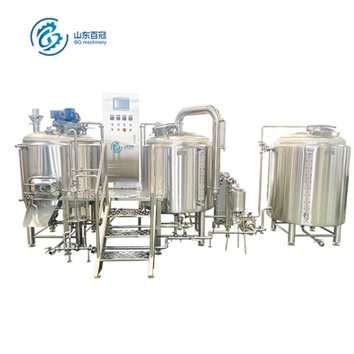


Custom Equipment Guide
Mashing and Lautering
|
Equipment |
Key Features |
|
Mash tun |
Custom size and shape, single vs dual vessel design, material (stainless, copper), insulation, automated temperature control, automated rakes |
|
Lauter tun |
Custom dimensions, false bottom design, sparge arms, wort grant design, level sensors, automated valve control |
|
Mash filter |
Filter plate size and material, fully automated operation, front-to-back vs upflow configuration |
|
Pumps |
Custom flow rates, self-priming vs standard, impeller material, worm gear for high viscosity |
|
Piping |
Diameter, valves, sensors and insulation tailored to process |
Wort Boiling and Cooling
|
Equipment |
Key Features |
|
Brew kettle |
Custom dimensions, direct vs indirect heat, automation of boiling, stirring and cooling steps |
|
Heat exchanger |
Type (plate, shell and tube), materials (stainless, copper), multiple units for multi-stage cooling |
|
Cooling jacket |
Custom jacket design for brew kettle walls, glycol chilling system |
|
Steam boiler |
Output matched to vessel sizes and boil rates, fuel type (gas, wood, electric) |
|
Flue gas condenser |
Heat recovery for pre-heating water, fully automated |
Fermentation and Conditioning
|
Equipment |
Key Features |
|
Fermentation tanks |
Custom size, shape, number based on batch size and annual production, cooling jackets, temperature control, stainless vs oak |
|
Brite tanks |
Custom size and number, glycol chilling jackets, pressure capability if carbonating, level sensors |
|
Yeast propagation |
Custom stainless tanks, fermenter turned propagator, temperature control, yeast handling system |
|
Racking and transfers |
Custom sanitary pipe diameters, automated valves and pumps, flow meters |
Advantages of Beer Brewing Equipment
Quality and consistency
One of the primary benefits of brewery equipment is the quality and consistency it ensures. Specialized machinery controls factors like temperature, pressure, and fermentation time, making sure that every batch of beer meets the desired standards.
Efficiency
Modern brewery equipment is designed for efficiency. Automated systems minimize manual labor, streamline processes, and reduce brewing time, allowing brewers to produce more beer in less time.
Cost savings
While the initial investment in brewery equipment can be substantial, the long-term benefits in terms of reduced production costs, less wastage, and higher output can lead to significant savings.
Scalability
Brewery equipment can be easily scaled based on production needs. Whether expanding from a homebrew setup to a microbrewery or scaling up production in an established brewery, there’s equipment available to suit every growth phase.
Flexibility
Today’s brewery equipment offers incredible flexibility. Brewers can easily switch between different beer styles, experiment with ingredients, and tweak recipes, all while maintaining consistent results.
Safety
Brewing involves handling hot liquids, pressurized systems, and chemicals. Modern brewery equipment comes with a range of safety features that protect brewers and ensure that the brewing process is safe and hazard-free.
Environmentally friendly
Many modern brewing systems are designed with sustainability in mind. They consume less water and energy, have efficient waste management systems, and are built using materials that have minimal environmental impact.
Applications of Beer Brewing Equipment

Customized brewing equipment enables excellent control over processes for:
Craft breweries – Unique recipes, seasonal offerings, specialty ingredients
Production breweries – Consistent flagship and year-round beers at scale
Taproom microbreweries – Small batches for on-premise consumption
Alternate fermentables – Wine, cider, mead, kombucha, tea-based brews
Research and development – Pilot batches, experimental techniques
Beverage programs – Breweries at restaurants, hotels, campus dining halls
Contract brewing – Equipment rented out for use by various clients
Types of Beer Brewing Equipment
Homebrewing Equipment: Primarily for hobbyists and enthusiasts, homebrewing kits are compact and include the basics needed to produce small batches of beer.
• Brewing kettle: Small stainless-steel pot used for boiling the wort with hops.
• Fermentation bucket: A plastic or glass container where the beer undergoes fermentation.
• Bottling bucket: Used for adding priming sugar and transferring beer into bottles.
All-grain Brewing Equipment: All-grain brewing gives brewers more control over their beer’s flavor. It requires slightly more sophisticated equipment.
• Mash tun: Used for mixing milled grains and water, facilitating the conversion of starches to sugars.
• Lauter tun: Helps in separating the liquid wort from the grain husks.
Commercial Brewing Equipment: Built for scale and consistency, these are heavy-duty equipment pieces designed for brewing large batches.
• Brewhouses: A combined system that includes mash tuns, lauter tuns, and brew kettles.
• Fermentation tanks: Large tanks where the beer ferments and matures.
• Bright beer tanks: Tanks where beer is clarified and carbonated before packaging.
Packaging Equipment: Once the beer is ready, it has to be packaged for distribution.
• Bottling lines: Automated systems that fill, cap, and label bottles.
• Kegging systems: Used for filling kegs for distribution to bars and restaurants.
Ancillary Equipment: There are several additional pieces of equipment that brewers use for various purposes.
• Heat exchangers: Used to cool down hot wort rapidly.
• Yeast propagation systems: For cultivating and storing yeast.
• Quality control labs: Equipment for testing and ensuring the quality of the beer.
Certificate


FAQ
We're professional beer brewing equipment manufacturers and suppliers in China, specialized in providing high quality products and service. We warmly welcome you to buy high-grade beer brewing equipment for sale here from our factory. Contact us for more details.
pump for beer brewing, pvc hose for beer brewing, beer kegging equipment