


Mash System
Your Professional Mash System Supplier for Brewery Equipment
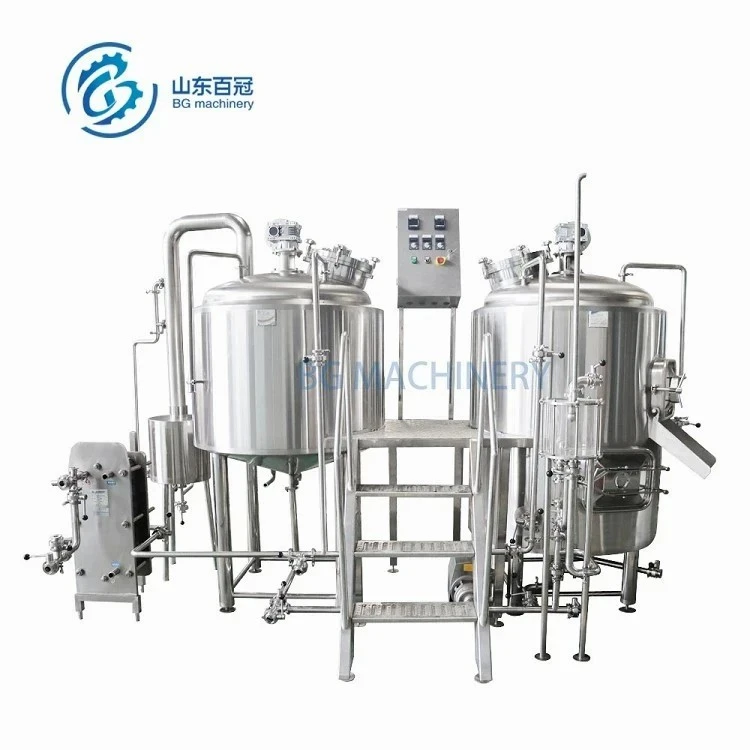
The Mash System is the engineering heart of any modern commercial brewhouse. It is responsible for converting crushed malted grains into fermentable sugars through precisely controlled thermal profiles and enzymatic conversion. This stage directly dictates the final beer’s attenuation, body, foam stability, color, and flavor profile.
Our brewhouse mash systems are engineered to meet the rigorous demands of craft breweries, microbreweries, and large-scale industrial beer production facilities. Available in manual, semi-automated, and fully automated configurations, these systems ensure maximum extract efficiency and batch-to-batch consistency.


Comprehensive Technical Parameters
|
Parameter |
Specifications & Capabilities |
|
Capacity Range |
50 Liters to 500 Hectoliters (HL) per batch |
|
Primary Material |
Premium SUS304 / SUS316L Stainless Steel |
|
Heating Method |
Low-pressure Steam Jacket / Electric Element / Direct Fire |
|
Insulation Layer |
80mm to 100mm high-density rock wool or polyurethane |
|
Internal Surface Finish |
Mirror polished to Ra less than or equal to 0.4 microns |
|
External Surface Finish |
Oil-brushed or 2B matte finish |
|
Automation Level |
Semi-automatic button control / Fully automated PLC touch panel |
|
Global Electrical Compliance |
220V / 380V / 415V / 460V (Customized to regional industrial standards) |
Premium Engineering & Performance Highlights
Precision Temperature Control: High-accuracy RTD sensors (PT100) ensuring temperature tolerances within ±0.5°C for strict adherence to mashing schedules.
Food-Grade Sanitary Materials: Certified Stainless Steel 304 or 316L. All internal welds are completely ground, smooth, and passivated.
Advanced Automation Integration: Control options ranging from intuitive touchscreens to comprehensive PLC systems (powered by global brands like Siemens or Schneider) featuring remote monitoring capabilities.
Energy-Saving Insulation: High-density polyurethane or rock wool insulation (80mm to 100mm) wrapped in a fully welded stainless steel outer shell to reduce thermal radiation losses.
Oxygen Pick-up Prevention: Underletting capabilities and bottom-fill designs minimize wort aeration during transfers, preserving beer freshness and stability.
High-Efficiency Mash/Lauter Vessels: Equipped with heavy-duty internal agitation, variable frequency drive (VFD) motors, and computer-designed rakes with automatic spent grain discharge out-doors.
Milled False Bottom: High-precision, removable wedge-wire plates (0.7mm gap) in the lauter tun to maximize liquid flow while retaining grain beds.
Advanced Heating Technology: Dimple-jacketed steam heating zones on the bottom and sidewalls, ensuring high thermal transfer rates without scorching the mash.
Sanitary Piping Network: Complete DIN/Tri-clamp sanitary process piping with pneumatic or manual butterfly valves, designed for complete drainage.
Integrated CIP Units: Dedicated, high-impact rotary spray balls within each vessel for comprehensive 360-degree automated cleaning.
Partnering with us grants you access to world-class manufacturing standards:
- Over 15 years of dedicated brewhouse and cellar tank fabrication experience.
- Proven deployment history with equipment operating reliably across over 100 countries.
- Complete turnkey capabilities encompassing facility layout, pipe routing, and process engineering.
- Strict QA/QC protocols, including comprehensive 48-hour pressure testing and dye penetrant weld testing.
- Supervised field installation, brewery commissioning, and long-term remote engineering support.
A highly optimized mash system synchronizes multiple biochemical reactions. The overall operational workflow includes:
Malt Hydration:
Homogeneous mixing of grist and hot liquor via a specialized grist hydrator to eliminate dry spots and beta-glucan gumming.
Enzymatic Mashing:
Precise step-mashing control to activate specific enzymes (Acid Rest, Protein Rest, Beta-Amylase, and Alpha-Amylase steps).
Wort Separation (Lautering)
Gravity or low-shear pumping transfer to the lauter tun for high-efficiency wort filtration.
Wort Boiling & Kettle Hopping
Vigorous boiling to sterilize the wort, coagulate proteins (hot trub), evaporate unwanted volatiles (like DMS), and isomerize hop alpha acids.
Whirlpool Clarification
Tangential entry to create a perfect trub cone, ensuring bright, clear wort enters the fermenters.
Brewhouse Configuration Options
We engineer flexible vessel configurations to align with your floor space, brewing frequency, and budget targets:
2-Vessel Brewhouse
Vessels: Mash/Lauter Tun + Kettle/Whirlpool
Best For: Microbreweries, brewpubs, and space-constrained startup projects.
Advantage: Highly compact footprint, low thermal loss, and cost-effective capital investment.
3-Vessel Brewhouse
Vessels: Mash Tun + Lauter Tun + Kettle/Whirlpool (or Mash/Lauter + Kettle + Whirlpool)
Best For: Growing craft breweries requiring 2 to 3 brews per day.
Advantage: Allows simultaneous mashing and boiling, significantly reducing overall turnaround time.
4-Vessel Brewhouse
Vessels: Mash Tun + Lauter Tun + Brew Kettle + Whirlpool Tank
Best For: Industrial-scale breweries and high-volume operations running multi-shift continuous brewing (4+ brews per day).
Advantage: Maximum throughput, specialized vessel sizing, and minimal idle time.
Global Applications
Our commercial mash systems are versatile assets utilized across various market sectors:
- Regional production craft breweries
- Urban microbreweries and commercial brewpubs
- Large-scale commercial beer manufacturing plants
- Pilot brewing facilities for recipe development
- University brewing science programs and R&D laboratories
Tailored Customization Options
We recognize that no two breweries are alike. Our engineering team provides custom solutions:
Custom Footprint Engineering: Tailoring vessel height, width, and deck layout to fit strict ceiling clearances or irregular floor plans.
Heating Infrastructure Support: Designing specific steam piping hookups or choosing multi-stage electric elements based on local utility costs.
Regional Certification Compliance: Manufacturing vessels in accordance with specific pressure standards and electrical codes (such as CE, PED, ASME, UL, or CSA).
Recipe-Specific Upgrades: Adding external wort stripping columns, decorative copper cladding, or automated hop dosing systems.
We're professional mash system manufacturers and suppliers in China, specialized in providing high quality products and service. We warmly welcome you to buy high-grade mash system for sale here from our factory. Contact us for more details.
commercial beer brewing equipment, hose for beer brewing, Stainless Steel Brewery Pipe Fittings System