


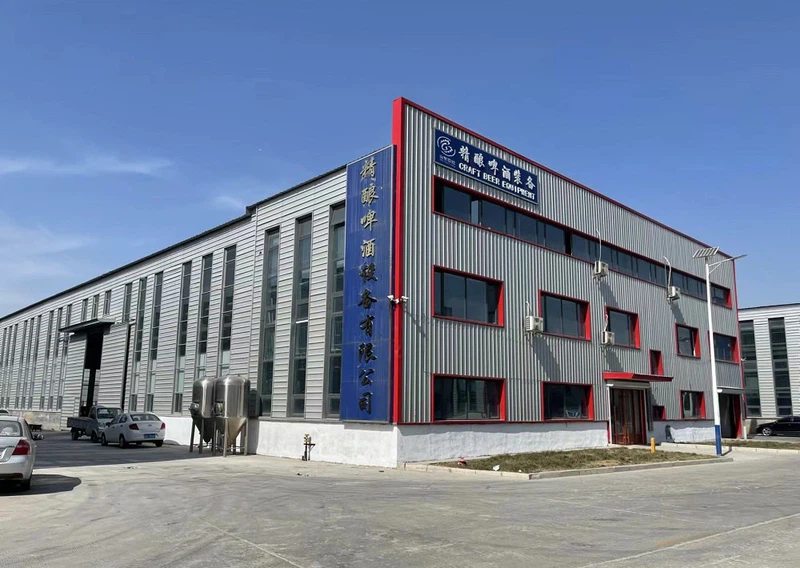
BG machinery was founded over 12 years ago as a manufacturing operation focused on producing high-quality, durable beer equipment for bars and breweries. The founder --- Mr. Hao, a veteran of mechanical manufacturing and passionate brewer himself, had a vision of creating equipment that would help other brewers achieve their craft with ease and efficiency.Over the years, we've grown to become a of beer equipment in our region, expanding our product line and distribution to reach customers across the country and globally. Our commitment to quality and innovation has led to numerous awards and recognitions within the industry, further cementing our reputation as a trusted and reliable source for all brewery equipment needs.
Well Equipped
Our product range includes a wide variety of brewing equipment, including brewhouses, fermentation tanks, bright beer tanks, filtration systems, kegging, canning and bottling lines, and much more.
Quality Assurance
Our commitment to quality and innovation has led to numerous awards and recognitions within the industry, further cementing our reputation as a trusted and reliable source for all brewery equipment needs.
Excellent Team
With a dedicated team of engineers, designers, and craftsmen, we're constantly pushing the envelope on what's possible in beer equipment design, delivering cutting-edge products that help brewers create the perfect brew every time.
Production Market
As a beer equipment factory, we have been fortunate to experience strong sales and performance in various regional markets.Locally, we have maintained a solid presence in our domestic market, serving breweries and bars across the country with high-quality, custom-made equipment. Our reputation for superior equipment has helped us gain a large share of the regional market, with many customers referring business through word-of-mouth.

Copper brewhouse Multiple models can be customized Customized copper brewhouse Customized copper beer equipment Copper brewery equipment Some bars ,hotels or breweries choose copper saccharation equipment, mainly for the following reasons: Beautiful and unique: Copper has a unique color and...

20000L Beer Fermenters 200HL Unitank
Which breweries need fermenters of 20,000 liters ? 1. Medium and large breweries: Production scale: Medium and large breweries require larger fermenters to meet production needs due to their larger output

100L Pilot Beer Brewing Equipment
100L 200L 300L pilot brewery system A pilot brewing system is a small-scale, portable, or scaled-down version of a typical brewing system that allows brewers to test new recipes, techniques, and equipment in a low-risk environmen

1000L 2000L Beer Fermentation Tanks Unitanks
1000L 2000L beer fermentation tanks unitanks In the case of a 1000L or 2000Lbrewhouse, the composition of the 2000L beer fermentation system is as follows: Configuration of 6-12 pcs of fermentation tank (the quanity can be adjusted), single tank single control, pressure and temperature to...

3000L Beer Brewhouse Turnkey Brewery
3000L brewhouse 6000L fermenters The configuration advantages of 3000 liters saccharification system and 6000 liters beer fermentation system are mainly reflected in the following aspects: Output and Efficiency: The 3000 liter saccharification system can continuously saccharify 4-6 bataches per...

1000L 2-body-3-vessel Beer Brewhouse
Overview of customized 1000L brewhouse Customized 1000L 3-vessel brewhouse , 2000L fermenting system can meet brew master's requirement for production plans and beer types.

1000L 10HL Brewhouse Turnkey Brewery
Overview of customized 1000L brewhouse Customized 1000L brewhouse , 1000L 2000L fermenting system can meet brew master's requirement for production plans and beer types.

Conical Fermentation Tank 4000L Craft Brewery Equipment
An increased production capacity through a 4000L fermenter can greatly benefit craft breweries. More consistent fermentation conditions result in improved beer quality, quicker brewing times, and long-term cost savings.

Horizontal Stacked Brite Tanks
Horizontal stacked brite tanks, also known as horizontal brite tanks or horizontal bright beer tanks, are stainless steel vessels used in the brewing industry to store and condition beer after primary fermentation.
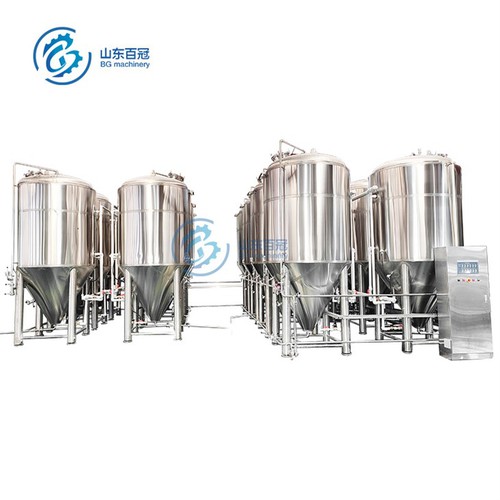
What is Conical Beer Fermenter
A conical beer fermenter is a fermentation vessel with a cone-shaped bottom. This design allows solids, such as yeast and trub, to settle at the bottom, which can be easily removed through a valve without disturbing the beer. Conical fermenters are typically made from stainless steel but are also available in other materials.conical fermenters, once out of reach for home brewers, have recently become very popular as companies have started making conicals in small and affordable packages. Many home brew sized conicals have entered the market in the last few years in the sub-$200 price range.
Benefits of Conical Beer Fermenter
Efficient Sediment Removal
One of the primary advantages of Conical Beer Fermenter is their ability to efficiently remove sediment. The cone-shaped bottom allows yeast and trub to settle naturally at the lowest point. By using the built-in valve, you can easily drain the sediment without transferring the beer to another container, reducing the risk of oxidation and contamination.
Reduced Risk of Contamination
Conical Beer Fermenter, especially those made from stainless steel, are easier to clean and sanitize than traditional fermenters. The smooth, non-porous surface of stainless steel prevents bacteria and other contaminants from hiding in scratches or crevices. Additionally, the ability to remove sediment without opening the fermenter reduces the exposure to air and potential contaminants.
Improved Beer Clarity
By removing sediment and trub efficiently, Conical Beer Fermenter help produce clearer beer. The ability to separate the beer from the solids results in a cleaner final product with fewer particles suspended in the liquid. This improved clarity is particularly beneficial for styles where a bright, clear appearance is desired.
Ease of Harvesting Yeast
Conical Beer Fermenter make it easy to harvest and reuse yeast. The sediment that collects at the bottom includes a significant amount of yeast, which can be collected through the valve. This harvested yeast can be stored and used for future batches, saving money on yeast purchases and ensuring consistency in your brewing.
Types of Conical Beer Fermenter
Standard Conical Fermenters
Standard conical fermenters are the most basic type available. They feature a single-wall construction and do not provide any additional temperature control. While they may lack some of the advanced features found in other types, they are still a popular choice among homebrewers and small-scale breweries due to their simplicity and affordability.With a standard conical fermenter, brewers can still benefit from the conical shape, which allows for the easy separation of trub and yeast, resulting in cleaner and clearer beer. Additionally, the conical design promotes better yeast health and fermentation efficiency.
Jacketed Conical Fermenters
Jacketed fermenters take the fermentation process to the next level by offering precise temperature regulation. These fermenters come equipped with a cooling jacket that surrounds the conical vessel, allowing brewers to control the temperature of the fermenting beer.This feature is particularly beneficial for controlling fermentation and achieving optimal yeast activity. By maintaining a consistent temperature throughout the fermentation process, brewers can ensure that the yeast is working at its best, resulting in better flavor development and overall beer quality.
Insulated Conical Fermenters
For brewers who ferment in environments with fluctuating temperatures, insulated fermenters are an excellent choice. These fermenters are designed with a layer of insulation that helps maintain a stable temperature throughout the fermentation process.The insulation acts as a barrier, preventing external temperature fluctuations from affecting the fermentation. This is particularly important during the cold winter months or in hot climates where maintaining a consistent temperature can be challenging.
Provide a controlled environment
Fermenters provide a growing environment for the yeast to carry out the fermentation process efficiently. The fermenter allows the winemaker to control various parameters such as temperature, pressure, and oxygen levels to ensure that the yeast activity is at its optimum.
Temperature control
Temperature is a critical factor in the fermentation process. Fermenters, especially those equipped with cooling and heating systems, allow the winemaker to maintain a constant temperature throughout the process. This control affects the production of specific flavors and aromas, as different yeast strains perform best at different temperatures.
Yeast management
Fermentation tanks provide space for yeast to multiply, consume sugar, and produce alcohol and carbon dioxide. When fermentation is complete, the yeast settles to the bottom of the vessel. Some fermenters are designed with features such as conical bottoms or dispensing arms that help separate the beer from the yeast sediment.

Flavor and Aroma Development
Yeast produces a variety of flavor compounds and aromatic esters when fermenting sugar. The fermenter helps to create a balance of these compounds by controlling parameters such as temperature and pressure to create the desired flavor profile of the beer.
Carbonation
In some cases, fermenters are used for secondary fermentation or conditioning, during which additional sugar or malt extract is added to produce natural carbonation. This process is critical for styles such as bottled beer.
Clarification and Maturation
In addition to fermentation, some beer styles benefit from an extended maturation or aging period. Fermenters can be used to facilitate this process, clarifying the beer before packaging and mellowing its flavor.
Material Options for Conical Beer Fermenter
Stainless Steel
Stainless steel is the preferred material for many commercial breweries and serious homebrewers due to its durability, resistance to scratching and contamination, and excellent temperature control. However, stainless steel fermenters tend to be more expensive than other options.
Glass
Glass fermenters offer a clear view of the fermentation process and are resistant to scratches and stains. However, they are more fragile than other materials and can be prone to breaking if not handled carefully.
Plastic
Plastic fermenters are lightweight, affordable, and easy to clean. However, they can be more susceptible to scratches, which can harbor bacteria and lead to contamination. Additionally, some plastic fermenters may not be as airtight as other options, making them less ideal for long-term storage or aging.
Ceramic
Ceramic fermenters provide excellent insulation and temperature control, making them ideal for fermenting lagers and other cold-fermented beers. They are, however, heavy and can be more difficult to clean than other materials.
Wood
Wooden fermenters, such as oak barrels, are used for certain styles of beer, like barrel-aged stouts or sour ales. The wood imparts unique flavors and characteristics to the beer but requires extra care and maintenance to prevent contamination.
How to Choose Conical Beer Fermenter
Surface And Material
The material of beer cans can be made of stainless steel or carbon steel, but if carbon steel is chosen, the inner wall of beer cans must be coated with a non-toxic coating that does not affect the taste of beer. The inside wall of beer cans must be smooth and flat, and the inside wall of stainless steel beer cans should be polished. Carbon steel beer cans should be evenly coated on the inside, with no unevenness, and no granular protrusions.
Capacity And Size
Determine the size of your brew and choose the appropriate capacity. A tank that is too small may result in uneven fermentation or insufficient containment, while one that is too large may waste space and resources. Make sure the size of the conical fermenter fits your winery or home brewing space, including ease of storage and cleaning.
Brewing Type
The type of beer being brewed will also affect the size of the fermenter you need. For example, if you want to brew a lager or other beer that requires precise temperature control, you may need to use a jacketed fermenter. These fermenters may be larger and more expensive, but they allow for better control of the fermentation process.
Tank Taper Angle
The taper angle of the tank is usually between 60°and 90°, commonly 60° to 75° (60° for stainless steel tanks and 75°for carbon steel tanks are common) to facilitate settling and separation of the yeast.
Cooling Jacket And Area
Depending on the capacity of the tank, the cooling can be two-stage or three-stage, the cooling area depends on the material of the tank, and the cooling area of the bottom of the cone should not be too large to prevent the beer from freezing during the storage period.
Pressure Resistance Of The Tank
During beer fermentation, the tank will produce carbon dioxide, forming pressure on the top of the tank, so the fermentation tank should be installed with a vacuum relief valve. Carbon dioxide discharge, the beer outflow rate is too fast, the fermenter flushing process of carbon dioxide dissolution, the tank produces negative pressure, so the vacuum valve must be installed.
How To Use a Conical Beer Fermenter
Step 1: Clean the Conical Fermenter
You must ensure that your conical fermenter is clean before you use it. If there are any cracks, scratches, or other imperfections on the vessel's surface, you should fix them.You can find out if a small crack exists by filling up half of the fermenter with water and checking if the pressure causes any leaks.
Step 2: Prepare Your Conical Fermenter
Once you have scrubbed and cleaned your fermenter, it is time to prepare it for use.Place an airlock in a hole near the top of the vessel on one side of its lid. Fill up half of the fermenter with water to test for liquid and air leakage. If there are no problems, allow it to sit overnight so any gases can escape.
Step 3: Prepare Your Wort
While you wait for your conical fermenter to finish preparing, prepare a fresh wort made from malt extract or other sugars such as honey.The wort should be boiled in another pot to kill any bacteria or contaminants that may exist.
Step 4: Transfer the Wort into Your Conical Fermenter
Once you have brewed your beer, it is time to transfer it into the fermenter. You can use a siphoning tube for this purpose and ensure no air bubbles enter the line. You may have to use a secondary fermenter if you don't have enough space in your conical fermenter.
Step 5: Pitch Enzymes and Yeast
Once you have transferred the wort, it is time for you to pitch enzymes and yeast so fermentation can take place.The vessel should be sealed tightly with its lid and left to sit for several days until the yeast has grown.
Step 6: Remove the Sediment
Once you have pitched enzymes and yeast, allow it to ferment for a few weeks, and remove sediment that may have formed on the bottom of your conical fermenter.There are specialized filters available if needed, but simply siphoning it out or using a racking cane will suffice.
Step 7: Transfer to Bottles
Once you have allowed the sediment to settle, transfer your beer into bottles and seal them tightly with caps.You may want to allow for secondary fermentation before drinking, but that is unnecessary unless you make champagne-style beers. The longer the bottle sits, the more carbonation will form.Use an auto-siphon or transfer pump (bucket) if possible for transferring liquid out of the fermenter.
Step 8: Clean Your Conical Fermenter Before Storage
Once you have finished using your conical fermenter, be sure to clean and sanitize before storage (avoid storing wet as this can lead to rust). Ensure that any valves or taps are closed off completely before storage with no airlocks in place.
How to Maintain Conical Beer Fermenter
Seal and Gasket Maintenance
Seals and gaskets play a critical role in maintaining a sterile environment within your fermenter. Inspect them regularly for signs of wear and replace them as needed. Lubricate gaskets with food-grade lubricant to maintain their flexibility and ensure a proper seal.
Monitoring and Controlling Fermentation Temperature
Temperature control is crucial for successful fermentation. Maintain a consistent temperature within the recommended range for the yeast strain you're using. Monitor the fermentation temperature using a thermometer and consider investing in a temperature control system if needed.
Airlock Maintenance and Care
The airlock is a vital component of your fermenter, allowing CO2 to escape while preventing contaminants from entering. Clean and sanitize your airlock after each use, and check for signs of wear or damage. Replace the airlock if it's no longer functioning properly.
Routine Inspection and Maintenance
Regularly inspect your fermenter for any signs of damage or wear. Look for cracks, scratches, or loose fittings that may compromise the integrity of your fermenter. Address any issues immediately to prevent contamination and maintain the overall quality of your beer.
Our Factory
Certificate


FAQ
Hot Tags: conical beer fermenter, China conical beer fermenter manufacturers, suppliers, factory, beer fermentation monitoring system, real-time monitoring beer fermenter, small scale beer fermenting equipment, brewing fermenter, 800L Beer Fermentation Tank, multi functional beer fermenting equipment


