


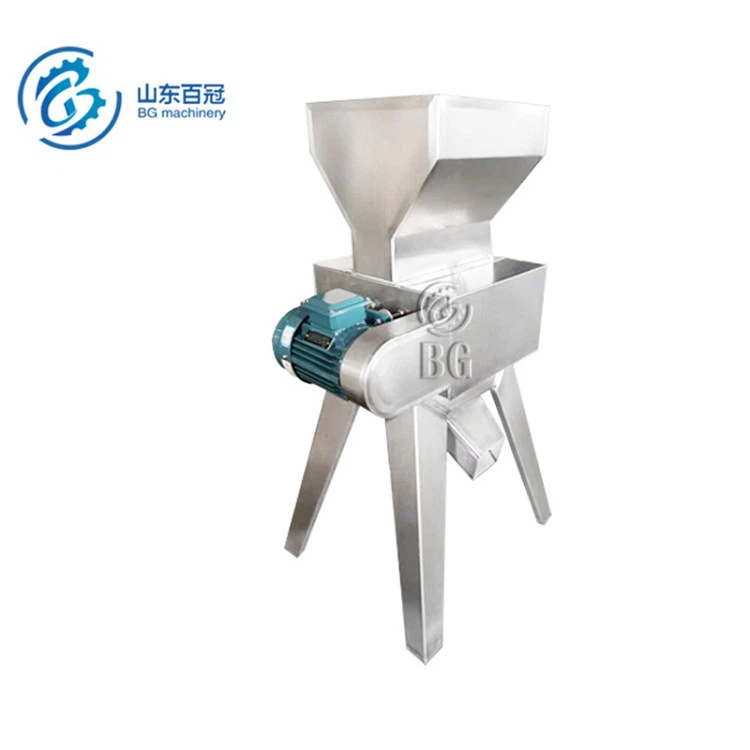
What is Malt Milling Machine
There are different types of malt milling machine with two, four, five or six rollers and an array of screens which vibrate to crush and segregate the grain kernels. An ideal grist for a brewery comprises the outer husk which is separated from the grain and endosperm crushed and exposed to form a uniform particle.

Yeast Expansion System Brewery
Yeast expansion system for a brewery is a specialized piece of equipment that is used to grow and expand yeast cultures. The system is used during the fermentation process to ensure that there is enough active yeast to complete the fermentation process.
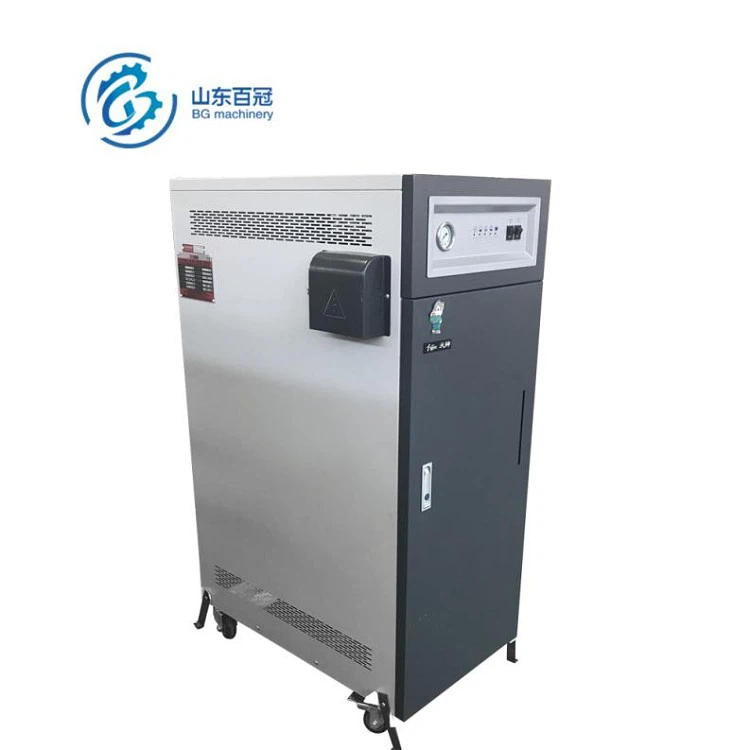
50kg/H, power 36kw electrical steam generator is suitable for 300L 500L beer brewhouse.
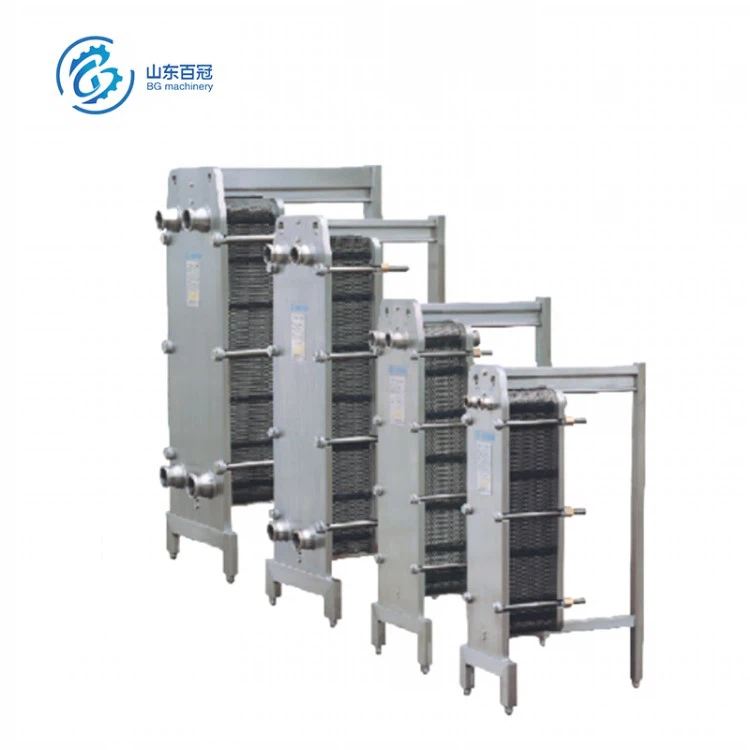
Plate Heat Exchanger Wort Chiller
Plate heat exchanger wort chiller is a specialized piece of equipment used in the process of brewing beer. During the brewing process, the wort (unfermented beer) needs to be cooled rapidly to a specific temperature to prevent contamination and facilitate the process of fermentation.

Chiller / Refrigerator For Brewery
A chiller or refrigerator for a brewery works by removing heat from various parts of the brewing process, such as the wort, fermenting beer, or serving beer. Depending on the specific equipment and the size of the brewery, a chiller or refrigerator may be used for one or multiple stages of the brewing process.
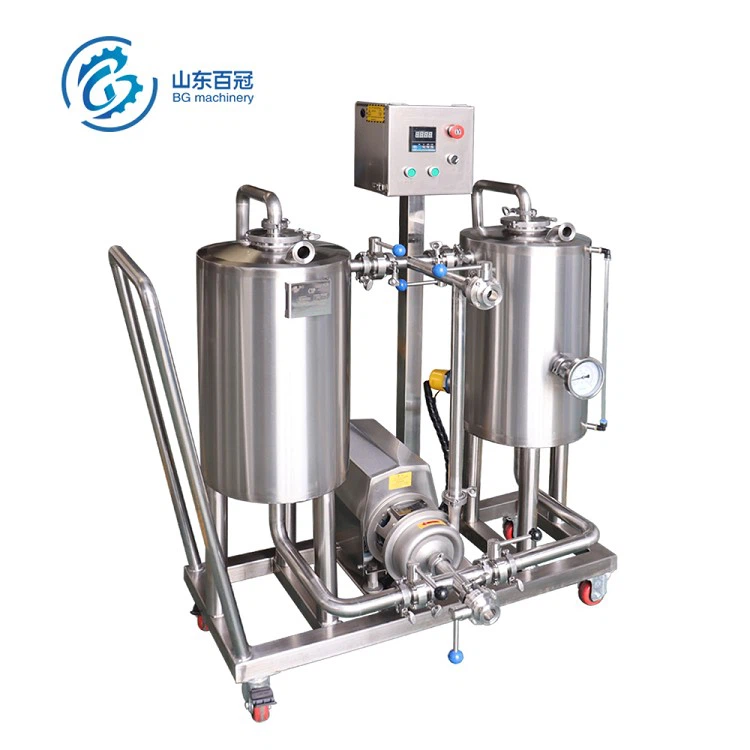
A CIP (clean-in-place) station for a brewery is a specialized cleaning system that is used to clean and sanitize the brewing equipment without disassembling it. The CIP process is used to maintain the cleanliness, hygiene, and quality of beer production in the brewery.

Malt milling machine is a specialized milling machine used in the process of brewing beer. It is designed to crush malted grains, such as barley or wheat, into a fine grist that can be used in the brewing process.
Why Choose us
Well Equipped
Our product range includes a wide variety of brewing equipment, including brewhouses, fermentation tanks, bright beer tanks, filtration systems, kegging, canning and bottling lines, and much more.
Quality Assurance
Our commitment to quality and innovation has led to numerous awards and recognitions within the industry, further cementing our reputation as a trusted and reliable source for all brewery equipment needs.
Excellent team
With a dedicated team of engineers, designers, and craftsmen, we're constantly pushing the envelope on what's possible in beer equipment design, delivering cutting-edge products that help brewers create the perfect brew every time.
Malt milling machine is the most typical gadget for squashing malt as well as grain right into grist in prep work for the mash. Malt milling machine vary by the number of tandem operating rollers and also by the therapy of the malt or grain prior to as well as throughout the milling procedure. The rollers are level or, in more recent mills, serrated, as well as they revolve at varying or the same rates.
The time depends on the size of the rollers, the wetness material of the malt, the roller rate, and also the kind of roller surface area. In some malt milling machine, the grist might be divided by dimension as well as some grist portions might be sent out with the mill a 2nd or also 3rd time.
Both rollers rotate at the very same rate. The malt passes with the rollers just as soon as.
Malt passes via the very first collection of rollers as well as is routed to a filter that allows better grist autumn with straight. The continuing to be, coarser grist is routed to the 2nd set of rollers.
After the initial set of rollers, the grist is divided right into 3 portions by a collection of 2 screens, where the finest portion, which is primarily flour, is routed away for collection. A coarser portion bypasses a 2nd set of rollers and also is sent out straight to a 3rd set to be crushed once more, whereas the coarsest portion, which is composed of husks with endosperm residues, is routed to the 2nd set, likewise to be grated once again. The rugged portion from this milling action is after that guided to the 3rd set of rollers to be grated a 3rd time.
The fractioning that is feasible with 4- as well as six-malt milling machine permits the optional splitting up of husks from the grist. The husks can after that be included in the mash later on, decreasing the leaching of astringent polyphenols. When including husks to the mash, nonetheless, it is vital that the husks be devoid of endosperm residues, due to the fact that these consist of unconverted starches that might wind up in the wort and also beer as hazes.
Some contemporary malt milling machine problem the malt with water prior to the milling procedure. One drawback is a boosted danger of microbiological contamination from wet down payments inside the mill itself. These mills, for that reason, have to be cleaned up extensively after usage.
While doing so called damp milling, the grist is successfully soaked in water up until it has as high as 30% dampness. Done effectively, the husks end up being flexible as well as the endosperm is ejected throughout milling making use of an easy two-malt milling machine.
Malt milling machine vary by the number of tandem operating rollers as well as by the therapy of the malt or grain prior to and also throughout the milling procedure. The time depends on the size of the rollers, the wetness material of the malt, the roller rate, and also the kind of roller surface area. In some malt milling machine, the grist might be divided by dimension and also some grist portions might be sent out via the mill a 2nd or also 3rd time.
A coarser portion bypasses a 2nd set of rollers and also is sent out straight to a 3rd set to be crushed once again, whereas the coarsest portion, which is composed of husks with endosperm residues, is routed to the 2nd set, additionally to be grated once again. Some modern-day malt milling machine problem the malt with water prior to the milling procedure.
A Guide to Purchasing a Malt Milling Machine For Your Brewery
Types of Malt Mills
Milling has been an integral part of food processing for centuries. When it comes to brewing, the type of mill you choose can significantly impact the quality of your beer. Among the various milling options, roller mills stand out as a preferred choice over hammer mills for many brewers. But why?
Roller mills operate on a simple principle. As the rollers turn, they exert pressure on the grains, crushing them into particles. The distance or gap between these rollers determines the granularity of the crushed particles.
2-roll mills – These mills come with a single set of rollers. They are user-friendly, generally more affordable, and serve as an excellent starting point for budding breweries.
4-roll mills – A step up from the 2-roll mills, these feature two sets of rollers. The second set specifically targets and breaks any hard grain ends, ensuring a consistent crush.
Other configurations – The world of brewery malt mills doesn't stop at 4-roll mills. There are also 6-roll mills, 3-roll mills, and other designs.
Prioritize Adjustability
The size of the grain particles can influence the extraction efficiency during the mashing process. Finer grinds can increase the surface area exposed to water, leading to better extraction of flavors and sugars. However, if the grind is too fine, it can lead to issues like a stuck mash, where the liquid doesn't flow freely through the grain bed.
The adjustability in most malt grinders comes from the ability to change the gap between the rollers. By narrowing or widening this gap, you can control the size of the crushed grains. It's also important to zero or parallel your mill at all times. Ensuring your rolls stay parallel is critical to maintaining grind quality. Our easily adjustable mills are key if you want to brew a variety of beers without compromising on quality.
The Need for Magnets
During the cultivation, harvesting, storage, and transportation processes, the grain comes into contact with a variety of machinery and equipment. This interaction can sometimes lead to tiny metal fragments or shavings getting mixed with the grains.
If not removed, metal debris can cause wear and tear on the milling equipment. Over time, this can damage the rollers. For consumers, ingesting metal fragments, even if tiny, can pose health risks.
When purchasing a mill, ensure it has a strong magnet system placed at the grain entry point in the mill. As grains pass over these magnets, any metal debris is attracted and held, preventing it from entering the milling mechanism.
How Starters Protect Mill Motors
At its core, a starter acts as a mediator between the power source and the motor. When the malt milling machine is turned on, the starter gradually ramps up the power, protecting the motor's health.
Starters can also protect against surges–Sudden spikes in voltage or current. These surges can cause significant damage to the electronic systems, reducing its efficiency and lifespan. Starters act as a buffer, absorbing these surges and ensuring a steady power supply to the motor so no damage occurs.
Starters are an essential feature to look for, especially if you plan to use your brewery malt milling machine frequently.
Making the Right Choice
Purchasing the right malt milling machine is the key to producing high-quality brews while limiting costs and ensuring efficiency. Whether it's the adjustability, magnets, or starters, every feature plays a crucial role in helping you get the best out of your grains.
Deep Cleaning Your Malt Milling Machine
Every so often, you really do need to give your malt milling machine a thorough cleaning. How often you need to do this will depend on how much you use your mill.
If you notice any clumps or if your mill is struggling to turn, a deep cleaning is overdue. Once you get every last bit of residue out, oil it to help keep the mechanical parts moving smoothly.
Unplug the malt milling machine if you have a motor-driven model.
Wipe down the exterior with a clean, dry, lint-free cloth.
Remove the hopper and the plates around your rollers using your screwdriver.
Use the brush to clear any sticky debris from the rollers.
Wipe all interior parts down with a second dry cloth. You don't want to transfer exterior dust and debris to the interior.
Give your rollers or plates a blast of compressed air to make sure no grit is left behind
Why not wash this baby down with some brewing sanitizer and a few quick blasts from the hose? One word: Rust. Make sure you keep your malt milling machine dry at all times so the rollers won't develop rust and become difficult to turn. Not to mention, rust could flake off into your grain, and make its way into your beer. Yuck.
Speaking of moisture, remember humidity in the air can also cause rust to form on metal surfaces over time. To protect your malt milling machine moving parts from humidity and oxidation, lubricate the rollers with food-grade mineral oil.
It's easiest to reach the bushings while you have your malt milling machine disassembled for cleaning. Apply just a few drops of oil to the bushing and the metal at the end of each roller.
To keep mineral oil from soaking into your next batch of malt, wipe any excess away with a clean, dry, lint-free cloth. Use just enough to protect the machine without turning it into a slippery, greasy mess.
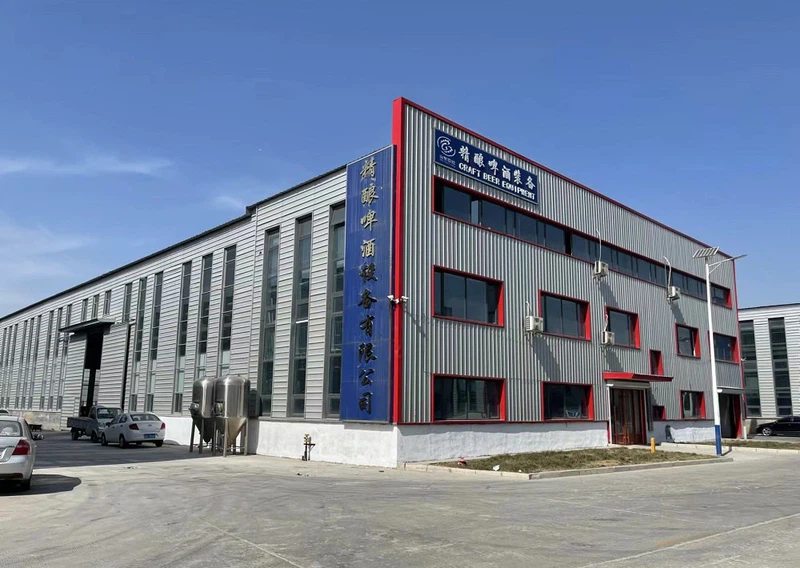
Our Factory
BG machinery was founded over 12 years ago as a manufacturing operation focused on producing high-quality, durable beer equipment for bars and breweries. The founder --- Mr. Hao, a veteran of mechanical manufacturing and passionate brewer himself, had a vision of creating equipment that would help other brewers achieve their craft with ease and efficiency.
Over the years, we've grown to become a of beer equipment in our region, expanding our product line and distribution to reach customers across the country and globally. Our commitment to quality and innovation has led to numerous awards and recognitions within the industry, further cementing our reputation as a trusted and reliable source for all brewery equipment needs.
Our Certificates


Asked Questions
Hot Tags: malt milling machine, China malt milling machine manufacturers, suppliers, factory, CIP Station Brewery, wort aeration nozzle cap, brewery flow meter, beer keg pump adapter, beer keg drying rack, Brewery Auxiliary Equipment


