

Yeast sedimentation is a crucial process in the brewing industry, significantly influencing the quality and efficiency of beer production. As a provider of 40BBL conical fermenters, I've witnessed firsthand the impact of various factors on yeast sedimentation, with the conical angle being a particularly important one. In this blog, I'll delve into the effects of the conical angle on yeast sedimentation in a 40BBL conical fermenter and explore how this knowledge can enhance brewing operations.
Understanding Yeast Sedimentation
Before we discuss the impact of the conical angle, it's essential to understand the process of yeast sedimentation. Yeast is a living organism that plays a vital role in fermentation, converting sugars into alcohol and carbon dioxide. During fermentation, yeast cells multiply and become suspended in the wort. Once fermentation is complete, the yeast cells start to settle at the bottom of the fermenter due to gravity. This sedimentation process is critical for separating the yeast from the beer, which helps clarify the beer and prevents off - flavors caused by over - contact with yeast.
The Role of the Conical Angle in Yeast Sedimentation
The conical angle of a fermenter is the angle formed by the sides of the conical bottom of the fermenter. It can have a profound impact on yeast sedimentation in several ways.
1. Settling Rate
A steeper conical angle, such as 60 degrees or more, promotes faster yeast sedimentation. The reason for this is that the steep sides of the cone allow the yeast cells to slide down more easily towards the apex of the cone. As the yeast cells settle, they are less likely to be re - entrained into the beer because the steep slope reduces the surface area where the yeast can accumulate and be disturbed by any movement in the beer.
On the other hand, a shallower conical angle, say 45 degrees, may slow down the sedimentation process. Yeast cells may take longer to reach the bottom of the cone, and there is a higher chance of them being trapped on the sides of the cone, leading to incomplete sedimentation. This can result in a cloudier beer and may require additional clarification steps.
2. Yeast Packing
The conical angle also affects how tightly the yeast packs at the bottom of the fermenter. A steeper conical angle encourages better yeast packing. As the yeast cells settle down the steep sides, they are forced into a more compact mass at the apex of the cone. This tight packing is beneficial for several reasons. Firstly, it makes it easier to remove the yeast from the fermenter during yeast harvesting. Secondly, it reduces the amount of beer that is lost along with the yeast, as the tightly packed yeast contains less interstitial beer.
In contrast, a shallower conical angle may lead to looser yeast packing. Yeast cells may spread out more on the sides of the cone, and there may be more beer trapped within the yeast mass. This can increase the amount of beer loss during yeast removal and may also make it more difficult to harvest a clean and concentrated yeast sample for reuse.
3. Yeast Harvesting Efficiency
Efficient yeast harvesting is crucial for cost - effective brewing operations. The conical angle directly impacts the ease and efficiency of yeast harvesting. With a steeper conical angle, the yeast is concentrated at the bottom of the cone, making it easier to access and remove. Brewers can simply open the valve at the bottom of the cone, and the tightly packed yeast will flow out smoothly.
In a fermenter with a shallower conical angle, yeast harvesting can be more challenging. The yeast may not be as well - concentrated, and there may be a greater risk of blockages in the yeast removal line. Brewers may need to use additional techniques, such as agitation or pumping, to ensure that all the yeast is removed from the fermenter, which can be time - consuming and may introduce oxygen into the beer, leading to oxidation issues.
Considerations for Different Brewing Styles
Different brewing styles may require different conical angles based on their specific yeast sedimentation requirements.
1. Lager Beers
Lager beers typically require a longer fermentation and conditioning period, and a clearer final product. A steeper conical angle (e.g., 60 - 70 degrees) is often preferred for lager brewing. The faster sedimentation and better yeast packing provided by a steep cone help to achieve a clearer beer with fewer yeast - related off - flavors. This is especially important since lagers are often cold - conditioned, and any remaining yeast can cause haze and off - flavors during this process.
2. Ale Beers
Ale beers, on the other hand, are often fermented at warmer temperatures and may have a more complex flavor profile that can tolerate a slightly cloudier appearance. A shallower conical angle (e.g., 45 - 55 degrees) may be sufficient for ale brewing. While the sedimentation may be slower, the yeast - derived flavors can contribute to the unique character of the ale. However, brewers still need to ensure that the yeast is eventually removed to prevent over - attenuation and off - flavors.
Our 40BBL Conical Fermenters
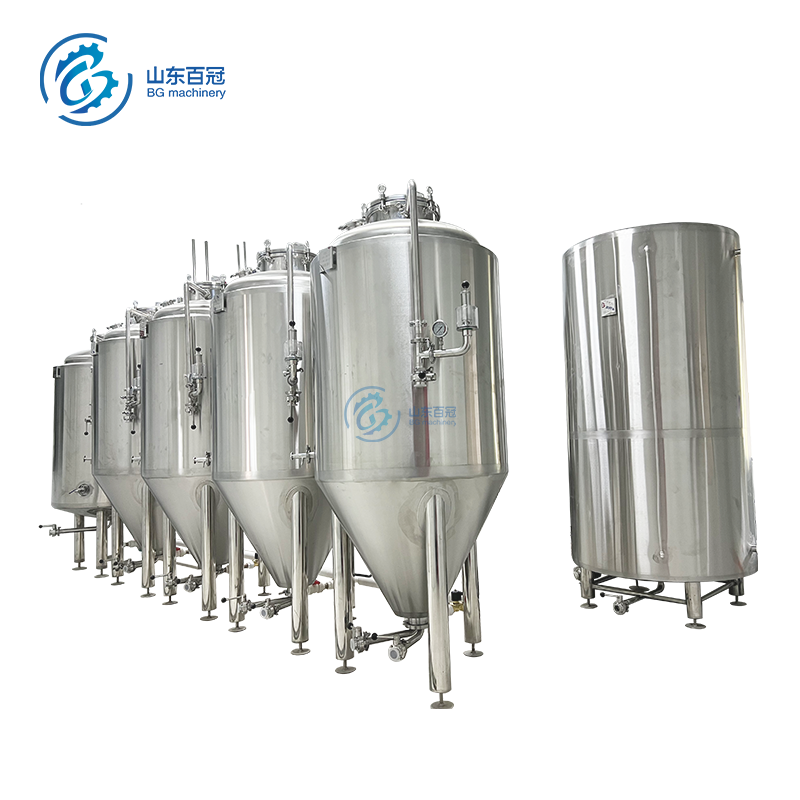
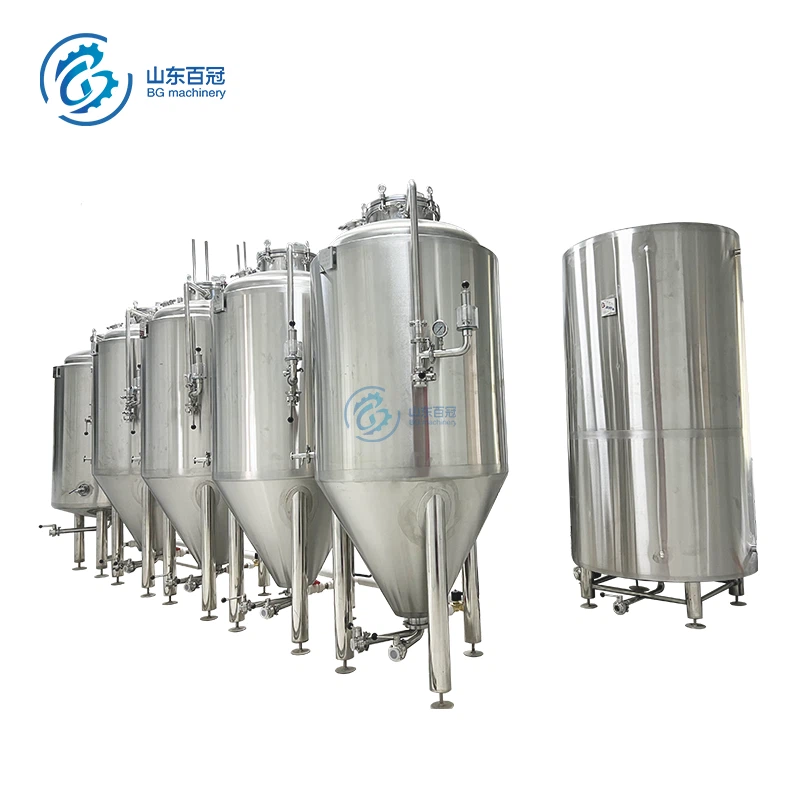
As a supplier of 40BBL conical fermenters, we offer a range of conical angles to meet the diverse needs of our customers. Our fermenters are designed with high - quality materials and advanced manufacturing techniques to ensure optimal yeast sedimentation.
Whether you are brewing lagers or ales, we can provide a 40BBL conical fermenter with the appropriate conical angle for your specific brewing requirements. Our team of experts can also offer guidance on yeast management and fermentation optimization to help you achieve the best possible results.
In addition to our 40BBL conical fermenters, we also offer a variety of other beer fermentation equipment, such as 1000L Beer Fermentation Tanks, 5HL 500L Beer Fermentation Unitank, and 20000L Beer Fermenters 200HL Unitank. These products are designed to provide reliable and efficient fermentation solutions for breweries of all sizes.
Conclusion
The conical angle of a 40BBL conical fermenter has a significant impact on yeast sedimentation, affecting the settling rate, yeast packing, and yeast harvesting efficiency. By understanding these effects and choosing the appropriate conical angle for your brewing style, you can improve the quality of your beer, reduce production costs, and enhance the overall efficiency of your brewing operations.
If you are interested in learning more about our 40BBL conical fermenters or other beer fermentation equipment, please feel free to reach out to us. We are here to help you find the perfect solutions for your brewing needs and support you throughout the brewing process.
References
- Bamforth, C. W. (2009). Yeast: the soul of beer's aroma - a review of flavour - active esters and higher alcohols produced by the brewing yeast. Fermentation, 1(1), 102 - 126.
- Boulton, C. A., & Quain, D. E. (2001). Brewing yeast and fermentation. John Wiley & Sons.
- Fix, G. (1999). Principles of brewing science. Brewers Publications.